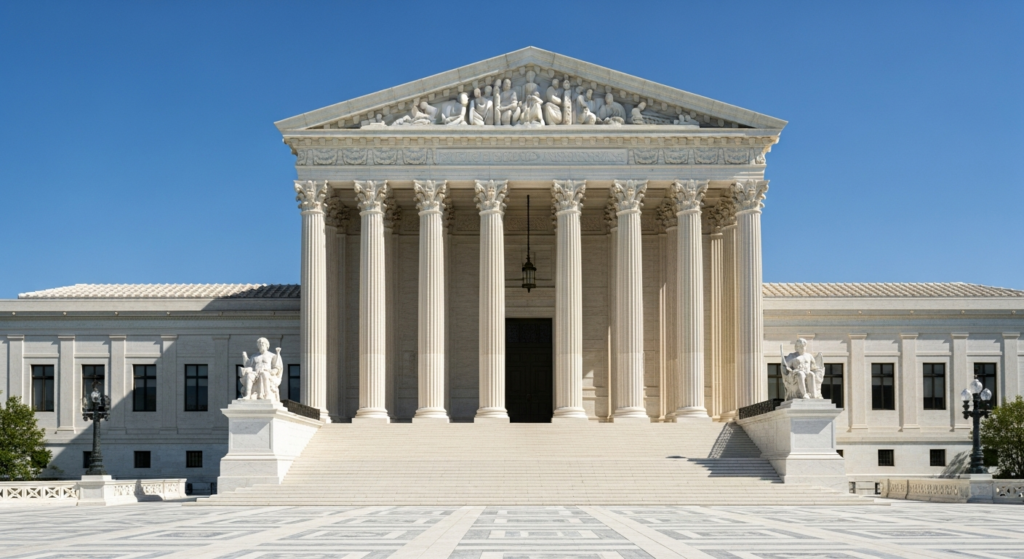
The United States Supreme Court is preparing for a new term that will address a series of high-profile legal disputes with potential far-reaching consequences across the nation, including in Clinton and the broader South Carolina Upstate region. The docket includes cases centered on restrictions for assault-style rifles, the intricacies of voter-registration rules, questions surrounding religious rights in relation to LGBT individuals, and procedural aspects of immigration detention.
These cases, routed through the federal courts system, involve fundamental constitutional claims and federal government litigation, ensuring they will be closely watched by legal scholars, policymakers, and residents alike. While the specifics of each case are national in scope, their ultimate resolutions could influence state laws and local practices, prompting discussions among officials and community members in Clinton.
One of the most prominent areas of contention involves gun policy, specifically challenges to restrictions on assault-style rifles. The Supreme Court’s decisions in this domain have historically shaped the interpretation of the Second Amendment, impacting both gun owners and law enforcement agencies. In South Carolina, where gun ownership is a significant aspect of many communities, any ruling could prompt a re-evaluation of existing state statutes or influence future legislative efforts. For local law enforcement, including Laurens County Sheriff Larry Dean and Clinton Police Chief Michael Addison, Supreme Court guidance on gun control measures directly affects the framework within which they operate and enforce public safety. Discussions around these rulings are likely to resonate among residents in neighborhoods like Hampton Woods and Southwood, who may hold diverse views on gun rights and regulations.
Another critical area on the docket concerns voter-registration rules. These cases often delve into the balance between ensuring election integrity and facilitating broad voter access. Given the federal nature of elections and the varying state-level implementations, a Supreme Court decision could influence how voter registration drives are conducted and how local election officials manage the voting process. In Clinton, the administration of elections falls under the purview of the City of Clinton, led by Mayor Comer H. “Randy” Randall and City Manager Joey Meadors, as well as Laurens County School District 56, overseen by Superintendent Dr. David Pitts, particularly concerning school board elections. Any changes to federal guidelines or constitutional interpretations could necessitate adjustments to local procedures, affecting residents across all of Clinton’s neighborhoods, from Historic Downtown Clinton to College View.
LGBT-related religious-rights questions represent another complex legal battleground the Court is set to navigate. These cases typically explore the tension between religious freedom protections and anti-discrimination laws, particularly in contexts involving public accommodations, employment, or services. The outcomes could have implications for institutions and businesses that serve the public. In Clinton, this could affect policies at educational institutions such as Presbyterian College, which plays a central role in the community, or the employment practices of major employers like Renfro Corporation and Laurens County Health Care System. Organizations like Thornwell Home and School for Children, which provides social assistance, could also find their operational guidelines influenced by such rulings. These decisions could shape local conversations about inclusivity and religious expression within the community.
Finally, the Supreme Court will also consider cases related to immigration detention procedure. While immigration law is primarily a federal domain, decisions on procedural matters can have indirect effects on communities. Changes to how immigration detention is managed could influence the demographics of various regions or the demands on social services, even in areas not directly involved in detention operations. While Clinton does not host a federal immigration detention facility, the broader impact of immigration policies can be felt through shifts in population and the diverse needs of residents within Laurens County. The Whitten Center, a state-operated facility in Clinton that provides services for individuals with disabilities, represents one of the many institutions that could, in varying degrees, be part of a broader community response to demographic shifts influenced by national immigration policies.
The upcoming term’s cases underscore the profound influence the Supreme Court holds over daily life and public discourse. For residents and officials in Clinton, these national legal battles translate into potential shifts in local governance, community standards, and individual rights, prompting ongoing engagement with the evolving legal landscape.
### Why it matters in Clinton
The Supreme Court’s upcoming docket holds significant implications for Clinton, particularly concerning the balance of individual rights and community standards. A ruling on gun policy, for instance, could directly impact local gun owners and the enforcement strategies employed by Laurens County Sheriff Larry Dean and Clinton Police Chief Michael Addison, potentially altering the local landscape of gun ownership and public safety discussions. Similarly, decisions on LGBT-related religious rights could influence the policies and practices of prominent local institutions like Presbyterian College and businesses such as Renfro Corporation, affecting employment, services, and the broader social fabric of the community. These cases will not only shape legal precedents but also fuel local conversations about constitutional principles, individual freedoms, and the role of government, directly affecting how life is lived and governed in Clinton.