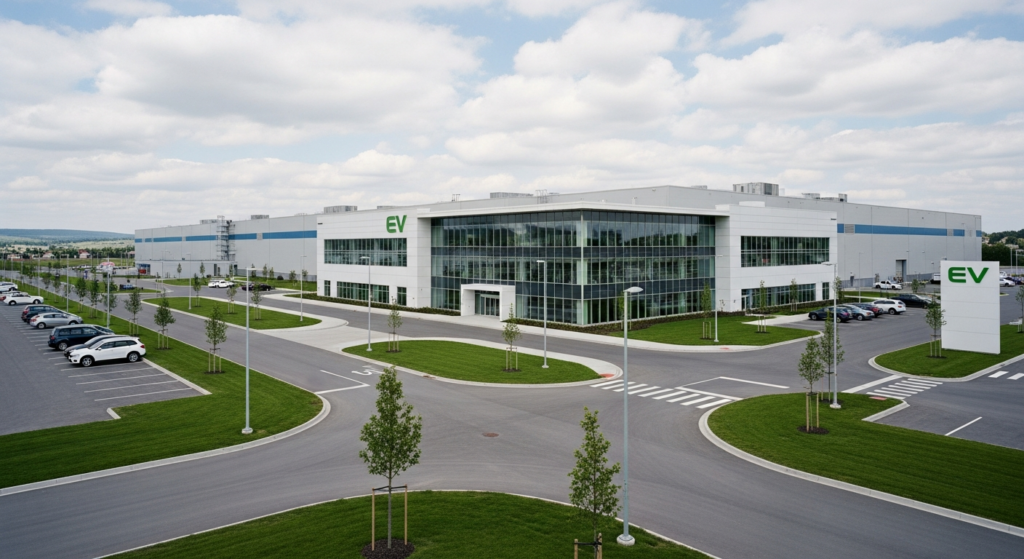
The BMW Group announced today, June 30, 2026, the completion of its previously detailed $1.7 billion investment in South Carolina, marking a pivotal moment for the automaker’s manufacturing footprint in the United States. This substantial capital injection included a significant expansion of the existing Plant Spartanburg and the construction of the new Plant Woodruff, facilities poised to play a central role in BMW’s global electromobility strategy.
The combined efforts of Plant Spartanburg and Plant Woodruff are designed to support the production of the next generation of BMW X models. Crucially, this includes battery electric vehicles (BEVs) that will be powered by high-voltage battery packs assembled locally at the new Plant Woodruff. This localized assembly of critical EV components underscores BMW’s commitment to building a robust electric vehicle supply chain within the region.
Further enhancing its operational capabilities, Plant Spartanburg is set to become the first BMW manufacturing facility globally capable of producing all five drivetrain variants on the same assembly line. This innovation provides the company with greater manufacturing flexibility, allowing it to adapt swiftly to evolving customer demands and market shifts towards electrification. The ability to produce diverse drivetrain types from a single line is a strategic advantage in a rapidly changing automotive landscape.
As part of this comprehensive investment, BMW also confirmed that production of the BMW iX5, an all-electric model, will commence at Plant Spartanburg before the end of 2026. This fulfills a commitment made by the automaker when the South Carolina investment was initially announced in 2022, demonstrating consistent progress on its long-term electrification goals. The iX5’s introduction signifies a tangible step in the transition to electric vehicle manufacturing at the Spartanburg facility.
Looking ahead, the BMW Group has articulated an ambitious target: by 2030, the company plans to assemble at least six fully electric BMW models in the United States. The combined investments in South Carolina are central to achieving this objective, reinforcing BMW’s long-term manufacturing presence in the U.S. while simultaneously fostering growth in key areas such as electrification, advanced manufacturing techniques, and offering a wider array of customer choices in the burgeoning EV market.
This strategic expansion solidifies the Upstate region’s position as a critical hub for advanced automotive manufacturing. The development is expected to have far-reaching economic effects, supporting job creation and technological innovation across the supply chain. The focus on electric vehicle production aligns with broader industry trends and positions the region at the forefront of automotive future.
### Why it matters in Clinton
The completion of BMW’s $1.7 billion investment in Spartanburg and Woodruff represents a significant economic development for the entire Upstate region, including Clinton. As a community within Laurens County, Clinton benefits from the robust manufacturing ecosystem that BMW’s expansion strengthens. The increased demand for skilled labor and specialized manufacturing roles across the Upstate can create new opportunities for residents of Clinton, potentially drawing them to well-paying jobs in advanced manufacturing. Furthermore, the overall economic stability and growth fostered by such a large-scale investment can indirectly bolster local businesses and services within Clinton, from retail to housing. Institutions like the Laurens County School District 56 may also see increased enrollment as families are drawn to the region for employment, or they may adapt their vocational programs to align with the evolving needs of the advanced manufacturing sector, ensuring a pipeline of skilled workers for companies like BMW. This regional growth contributes to the prosperity and vitality of Clinton and its surrounding areas.