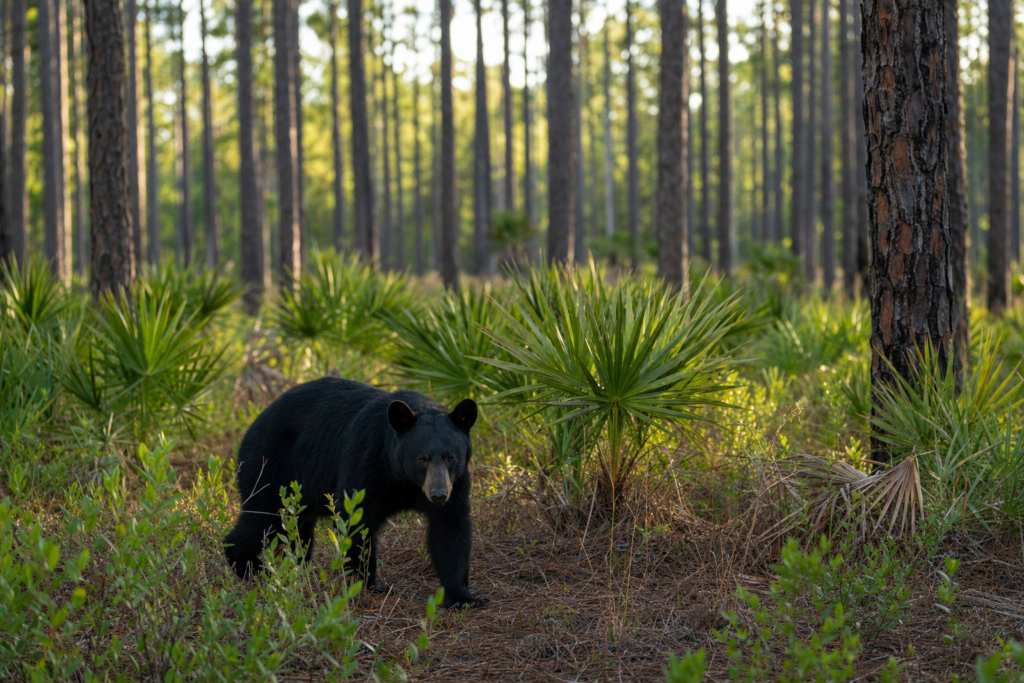
Florida’s application window for a regulated bear harvest opened at 10 a.m. Eastern on September 11 and runs through 11:59 p.m. on September 21, opening a 10-day period in which resident and nonresident hunters can enter a random drawing for a limited number of permits.
The 2026 hunting season itself is set for December 5 through December 27, a three-week window at the end of the calendar year. A hunter drawn for a permit will be authorized to harvest one bear in one of four designated Bear Harvest Zones.
Applications cost $5 each, plus handling fees, and applicants may enter as many times as they wish. Only one nontransferable permit will be issued to any individual selected in the drawing. Resident permits are $100 plus handling fees; nonresident permits are $300 plus handling fees. Applicants must be at least 18 years old by October 1 to be eligible for the drawing.
A statewide cap on nonresident allocation limits nonresidents to no more than 10 percent of all permits issued, keeping the majority of harvest opportunity in the hands of Florida residents. In addition to the harvest permit, a standard hunting license is required to hunt bears in the state, unless the hunter qualifies for a license exemption.
The four harvest zones are drawn from the state’s Bear Management Units, which have historically been used to track population densities, sightings, and human-bear conflict data by region. Zone-level permit allocations, when published, are shaped by those density estimates and by input from the state’s bear program biologists.
A regulated hunt in Florida has been closely watched since the state’s previous limited hunt more than a decade ago, when a two-day season closed early after the statewide harvest reached its target faster than planners had projected. The compressed 2015 season fed years of debate over quotas, methods, and season structure, and the current framework is the product of a multi-year rebuild of the hunt’s design.
The December calendar is timed to fall outside the sow-with-cubs sensitivity window and to line up with cooler weather, when bear movement patterns are more predictable and when meat handling is easier for successful hunters. The three-week length gives permit holders time to hunt without pressuring them into a single opening weekend.
Successful applicants will be notified after the drawing closes and given instructions on tag pickup, mandatory orientation requirements, and harvest reporting procedures. As with other big-game hunts in the state, tag holders will be required to submit successful harvests for biological sampling, which supports ongoing work on population age structure, reproductive rates, and disease surveillance.
Applicants who are not drawn are not automatically rolled forward and must reapply in future application windows. The state has not published a preference or point system tied to this drawing, so each application year stands on its own.